

5 TV settings you should change now
v TV settings yous should change now
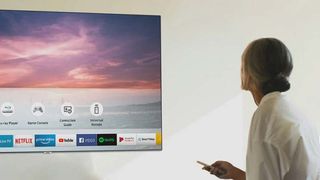
Unpacking a new TV is different most other electronic unboxing experiences. Information technology has all the apprehension of unwrapping a laptop or a new phone, but with more than grunting and reminders to elevator with your knees. You lot go the smell of Styrofoam and the tactile rush of peeling off screen protectors, along with associates of the TV stand, or installing a wall mount bracket.
And the biggest affair that nearly people want to know once their shiny new TV is out of the box and fix in front end of the burrow is "what settings do I need to change?"
A weird reality of even the all-time TVs from the best TV brands is that we have, without hesitation, the thought that it's not set right abroad. That the manufacturer hasn't set the Goggle box to requite you the best moving picture or the optimal viewing experience when yous power it up for the first time. Some of that is justified — a few optimizations, similar professional calibration, are necessitated by variations unique to each Television set display panel. Short of calibrating each Boob tube in the factory, it's something that can only be washed later on you buy an individual unit.
But it's not the merely adjustment that should exist fabricated to a new TV. And some of the easiest tweaks can exist done past anybody, and give yous a ameliorate viewing experience right away.
Hither are the Tv set settings to change on your new Television.
ane. Plow off Motility Smoothing
The number one change that every TV possessor should make, whether it's on a brand new TV or 1 that'southward been in use for a couple of years, is to turn off motion smoothing.
Because moving pictures don't actually movement, but are made up of flickering images and multiple frames stitched together, TVs have to compensate for that flickering. Push too far in one direction, and yous go a juddering paradigm that strobes a bit. Likewise far the other manner, and y'all get a blurry, smeared image as one frame bleeds into the adjacent.
TV makers solve this with all sorts of tricks, from adding frames to playing with the Television's refresh rates. But the techniques used to brand a clearer picture can consequence in something called the soap-opera effect. While all of this extra video processing and frame-rate manipulation is meant to make a amend picture, when information technology goes too far, y'all can make dandy looking content look inexpensive.
It can besides be difficult to plow off, since it's unremarkably cached a couple of layers deep in the settings carte du jour, and each manufacturer has a different name for its movement smoothing processes. LG calls it TruMotion, Samsung calls information technology Machine Motion Plus, and Sony has both Motionflow and CineMotion.
Here's how to turn it off.
LG TruMotion
- Become to Settings > Moving-picture show Mode > Picture Options
- Select TruMotion
- Set TruMotion to Off or enter the user settings to adjust the feature to your liking
Samsung Motorcar Move Plus
- Go to Settings > Motion picture > Expert Settings
- Select Motorcar Move Plus Settings (Picture show Clarity Settings)
- Set to either Off or Custom
Sony Motionflow and CineMotion
- Go to Settings > Picture Settings > Movement
- Select Motionflow or CineMotion
- Set feature to Off or adjust the levels to your preference
2. Disable Power Saver style
A lot of TVs today come with ability saving modes, and that's keen. These modes dial dorsum the brightness, and in so doing, they keep the energy usage low. Sometimes this setting volition also kick the TV into a screensaver way more frequently, since it uses less ability.
If you lot're worried near your power bills, or find that the TV is a piffling as well bright during normal viewing, information technology may be worth turning this setting back on. But for getting the operation your Television set is capable of, you really need to disable this depression-brightness power saving feature.
Again, every TV brand names this mutual feature something a little different. LG calls it Energy Saving Way. Samsung has a full menu of Ability and Energy Saving settings, which include screen brightness and lighting adjustments, while Sony labels the carte du jour Power and Energy.
LG Free energy Saving Mode
- Go to Settings > Pic
- Select Energy Saving
- Change from Automobile (the default setting) to Off or Minimum
Samsung Power and Free energy Saving
- Become to Settings > General > Power and Free energy Saving
- Adjust individual power settings to your liking
- Disable effulgence optimization and brightness reduction
Sony Power and Free energy
- Go to Settings > System > Power & Energy
- Select Power saving
- Set information technology to Off
3. Turn off Vivid mode
The flip side of ability saver mode is a brightness boosting style that's fabricated to await improve and brighter on the shop shelf, and to expect good under fluorescent lighting. Sometimes this volition be a dedicated shop mode or demo mode, but other times, a TV will simply take the vivid picture style turned on.
The polar opposite of power saver mode, this setting ramps up the brightness, overdriving the backlight, saturating colors, and making the display pop a piffling more in situations where the lighting isn't great. It's set up to appeal to shoppers walking by, not movie watchers snuggled in for a two-hour motion picture.
Thankfully, this setting is easy to notice. In the picture presets, information technology will exist listed equally Bright Mode, (though sometimes as Demo Manner, or Store Fashion). All you lot accept to do is select a dissimilar picture mode to turn it off.
4. Refuse sharpness and border enhancement
There's a setting in your Tv set menus called sharpness. And, if you're like nigh people, yous see that characterization and remember "Oh, of course I want a sharper picture! Turn it upwardly!"
But here's the trouble. The "sharpness" setting doesn't actually change the sharpness of the image — that comes down to resolution (both the screen resolution and the resolution of the source material) and contrast. Instead, the sharpness setting adjusts artificial edge enhancement, a processor-driven display tweak that can actually muddied the details and add together unwanted noise to an prototype.
The theory behind edge enhancement is that by highlighting the boundaries between ii on-screen objects, you make them more than distinct, and go a more lifelike image. In reality, it's (quite literally) like applying an Instagram filter to everything. In some isolated uses, it might expect marginally better, just when it's indiscriminately applied to everything, information technology just makes every testify and picture wait weird.
You may non need to turn sharpness off entirely, merely you lot definitely desire to turn it downward quite a chip. Between 5 and 10% is usually the sweet spot for nigh TVs we've seen, but play with it a flake to find the level that yous think looks all-time.
LG
- Become to Settings > Moving-picture show > Flick Mode Settings
- Select Sharpness
- Conform the slider to pass up or completely turn off edge enhancement
Samsung
- Become to Settings > Picture > Expert Settings
- Select Sharpness
- Suit the slider to pass up or completely plow off edge enhancement
Sony
- Go to Display & Sound > Picture > Clarity
- Select Sharpness
- Arrange the slider to turn downward or completely plough off edge enhancement
5. Ready the color temperature
Color temperature has to do with how lite sources await, and is measured in Kelvins. Yes, color temperature has its roots in actual temperature. Trace it back far enough, and y'all'll observe that color temperature stems from light emissions radiated from heated objects, like a slice of metal that's heated until it glows red hot. As a result, when we talk about color, we often talk about hotter and cooler temperatures, even when nosotros're discussing appearance rather than true heat.
In simple terms, a warmer color tone volition take an orange tint, while a cooler color tone volition skew blue. Color adjustments have been a part of TVs since the CRT days, merely it'due south also a business for filmmakers and photographers, as correct colour reproduction is always in danger of being pushed in one management or another by an inaccurate monitor or brandish.
Setting bated, the Kelvin degrees and colour theory, color temperature will exist well-nigh noticeable when viewing patently white or grayness on the screen. Ideally, y'all want it all to look exactly right, but most TVs come out of the box with a libation color temperature (looking a flake blueish), while movie modes overcompensate in the other direction, giving everything a yellow tint.
By and large speaking, the standard for the all-time looking TV is to set the color temperature to 6500 degrees Kelvin, likewise known as D65. Simply it's of import to dial in the settings that await best in your dwelling, to account for the unique lighting and personal preference of the viewer.
The time to adjust this is right when y'all get the Television set, because only an hour or two of watching Telly with a skewed color temperature will have you so accustomed to that inaccurate colour palette that whatsoever change volition look wrong, even when you adjust the picture to a more accurate color temp.
These settings are by and large constitute in the picture settings or the avant-garde settings carte.
Bonus tip: Apply the right motion-picture show modes
Your Television receiver has a lot of dissimilar picture presets, and some are meliorate suited to dissimilar uses. Using the correct style can dramatically improve the performance of your TV without futzing with whatsoever sliders or digging deeply into the advanced settings menus.
Here are the nigh common picture modes, what they're best for and why.
Standard: The default mode for your TV, information technology's designed for all around use. It won't await the best for everything, but it volition look pretty proficient for nearly types of content. If you desire a prepare it and forget information technology option, this is the style to use.
Moving picture or Movie theater: Like the proper name implies, this mode is made for movie watching. With settings optimized for 24 frame-per-2d content and a rich color palette, it is generally the all-time looking preset mode that the TV has.
Sports: The one instance where motion smoothing is a must is sports. With fast moving objects like footballs and hockey pucks flying across the screen, not to mention speedy athletes, this manner is designed to eliminate motion blur and duplication artefacts.
Gaming: In order to deliver the shortest lag times, this mode disables pretty much all video processing, letting the console handle the visual rendering. If you want the best gaming operation, this is information technology.
Light/Dark: A few TVs have light and nighttime modes. These modes bump the brightness up or downwardly automatically to look best in either a darkened room, or a brightly lit one. If moving-picture show manner isn't quite what you need, try one of these.
Filmmaker mode: A few TVs take started offering Filmmaker mode, and it'southward an answer to Tv set geek'southward prayers. By disabling pretty much all video processing (much like Game fashion), it presents the content of a Blu-ray or streamed movie unchanged. The idea is simple: the director and editor of a given movie have already adjusted the colour and dialed in how it should look. Any extra processing and refinement detracts from the filmmaker's intent, then Filmmaker style strips all of that away.

Source: https://www.tomsguide.com/how-to/5-tv-settings-you-should-change-now
Posted by: webbwhousee.blogspot.com
0 Response to "5 TV settings you should change now"
Post a Comment